
Bye Bye Boredom: Simple pays to keep kids engaged & happy all summer long

By Lucy Chatman

As soon as summer begins, the rhythm of the home shifts.
At first, there’s excitement — no school, no alarms, no structured mornings. But within days, that open space often turns into a familiar refrain: “I’m bored.”
nd when boredom shows up, screens tend to follow. Phones, tablets, and gaming consoles become the easiest way to fill the gap between having nothing to do and needing something immediately. The challenge for parents isn’t eliminating boredom. It’s making real-world activities easier to access than digital ones.That shift doesn’t require complicated planning. It comes from having a few simple, repeatable ideas ready — things kids can step into without negotiation or setup fatigue.
Turning the Backyard Into a Place Kids Actually Return To
The most effective summer shift happens when outside becomes the default, not the alternative.
Instead of waiting for boredom to show up inside, the day begins with a simple move outdoors — even if nothing is planned yet. Once kids are outside, their attention naturally shifts toward movement, curiosity, and interaction. One of the easiest ways to sustain that energy is through a structured but flexible “backyard play cycle.” Instead of trying to keep kids entertained with new ideas all day, you rotate through a few short, high-energy games that naturally build momentum.
A simple version of this might look like starting with a timed relay race using household objects — cones, shoes, or water bottles marking a path. Each child runs the course, then adjusts it slightly for the next round. After a few rounds, the game naturally evolves into obstacle challenges or team variations without needing adult direction.
Once energy is up, you shift into a quieter game like hide-and-seek or “shadow tag,” where the rules slow the pace but keep kids engaged outdoors.
The key is not the specific games themselves, but the rhythm: one active burst, followed by one slower game, then a reset. This pattern keeps kids outdoors longer without needing constant reinvention.

Making Food Part of the Experience, Not Just the Break
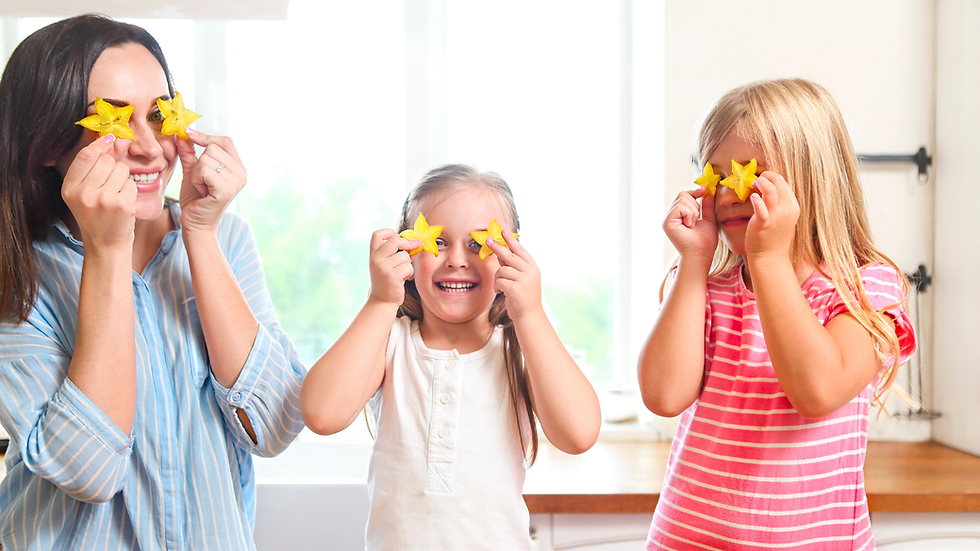
Summer snacks often become transition moments between activities, but they can easily become activities themselves. Instead of preparing food for kids, the kitchen becomes a small creative space where they build what they eat. One of the most effective setups is a “build-your-own snack station.” You prepare ingredients once, and kids take over the process.
For example, fruit skewers work especially well because they are simple, visual, and customizable. Place bowls of strawberries, grapes, melon, and blueberries on the counter, along with skewers or sticks. The only instruction is to “make something colorful and cold.”
As kids assemble their snacks, they naturally begin experimenting with combinations. What starts as food preparation turns into creative decision-making, which keeps them engaged far longer than a pre-made snack would. The same idea applies to smoothies. Instead of blending everything yourself, kids choose from a small set of ingredients and create their own combinations. The experience becomes more about experimentation than consumption. What matters most is not the food itself, but the ownership of the process.
Creative Time That Feels Like an Experience, Not a Project
On slower afternoons, creativity works best when it is open-ended enough to feel like exploration rather than instruction. Tie-dye is one of the most effective examples because it naturally unfolds over time and keeps kids engaged in stages. Set up a simple outdoor station with one white cotton T-shirt per child, rubber bands, a plastic-covered table, and a basic tie-dye kit. Before starting, show them a few folding techniques — spirals, folds, or scrunching — but don’t over-direct the outcome.
Once shirts are prepared and colors are applied, wrap them and set them aside. The waiting period becomes part of the experience, not downtime to fill.
Later, when the shirts are rinsed and revealed, the result feels like a payoff rather than a task completion. That sense of anticipation is what makes this activity hold attention longer than most crafts.
A similar approach works with sidewalk chalk, but only when it is treated as shared world-building rather than individual drawing. Instead of asking kids to “draw whatever they want,” give them a shared prompt such as building a summer town. One child might sketch roads, another designs houses, and another creates shops or parks. Once the basic structure is in place, the space becomes something they step into and play inside of, not just something they look at. The difference is that the activity continues after the drawing is finished.

Stay-at-Home Doesn’t Have to Mean Low-Engagement Days
Some of the most successful summer days are not about leaving home, but about temporarily reimagining it. Instead of treating home as a place to fill time, it becomes the setting for small “events” that break routine.
A backyard campout is one of the simplest examples. Blankets, pillows, and flashlights turn an ordinary evening into something different without requiring travel or setup complexity. Adding small elements like snacks, music, or storytelling gives it shape without over-structuring it. Outdoor movie nights work in a similar way. Whether using a projector or a tablet outside, the shift in location changes the experience more than the content itself.
What makes these moments effective is that they interrupt routine without requiring planning fatigue. Kids feel like something special is happening, even though everything is close to home. A helpful rhythm is designating one “stay-at-home experience day” each week — not as an event to plan extensively, but as a predictable moment where something slightly different happens.

The Real Shift: Making Real Life Easier Than Screens
Boredom will always exist in summer. The difference is what fills the space after it appears.
When screens are the fastest, most immediate option, they naturally become the default. But when kids have a few well-designed, easy-to-start alternatives, something changes.
They begin to move from asking “What should I do?” to “Can we go outside?” without prompting. That shift doesn’t require removing technology. It requires making real-world engagement more accessible than passive entertainment.
Summer doesn’t need to be structured to be meaningful.
It just needs enough moments that are easy to step into — moments where kids are building, moving, creating, or exploring in real time. Because the most memorable parts of summer rarely come from what was planned. They come from what was simply happening.

By Lucy Chatman
Staff Writer for HealthyHOME Media


Comments